-
Backup Strategy in Cloud: Know and Run
Published by
on
 Continue reading →: Backup Strategy in Cloud: Know and Run
A strong cloud backup strategy is vital for data protection, business continuity, and regulatory compliance. It safeguards against data loss from deletions, corruption, and cyberattacks. Key components include backup goals, approaches like full, incremental, and differential backups, and automated processes. Regular testing and monitoring ensure effectiveness and cost-efficiency.
-
Multi-Region Deployment: How to Implement It
Published by
on
 Continue reading →: Multi-Region Deployment: How to Implement It
Multi-region deployment strategically distributes applications across various geographic regions, enhancing availability, reducing latency, and ensuring disaster recovery. It meets global user demands through scalability and regulatory compliance while improving performance. While it involves complexities, leveraging modern tools like Terraform and Kubernetes can simplify implementation, ensuring resilience and efficiency across operations.
-
 Continue reading →: Auto-Scaling and Multi-Region Deployment: Benefits and Implementation
Auto-Scaling and Multi-Region Deployment are essential strategies for optimizing IT resources and enhancing user experiences. Auto-Scaling adjusts computing resources based on demand, improving performance and reducing costs. Multi-Region Deployment enhances reliability and reduces latency. Together, they enable scalable, resilient systems while addressing challenges like data synchronization and cost management.
-
Understanding about Load Balancing
Published by
on
 Continue reading →: Understanding about Load Balancing
Load Balancing is vital in IT for distributing network traffic across multiple servers, enhancing performance, availability, and scalability. Key techniques include various algorithms like Round Robin and Least Connections. Deployment options range from hardware to software and cloud solutions. Effective implementation requires health checks, security measures, and dynamic scaling strategies.
-
6 Phases in Node.js Event Loop: Are They Sequential?
Published by
on
 Continue reading →: 6 Phases in Node.js Event Loop: Are They Sequential?
The Event Loop in Node.js consists of six sequential phases: Timers, Pending Callbacks, Idle/Prepare, Poll, Check, and Close Callbacks. Microtasks, such as process.nextTick and Promises, take precedence and can interrupt the phases. This structure allows efficient handling of asynchronous tasks utilizing a single thread.
-
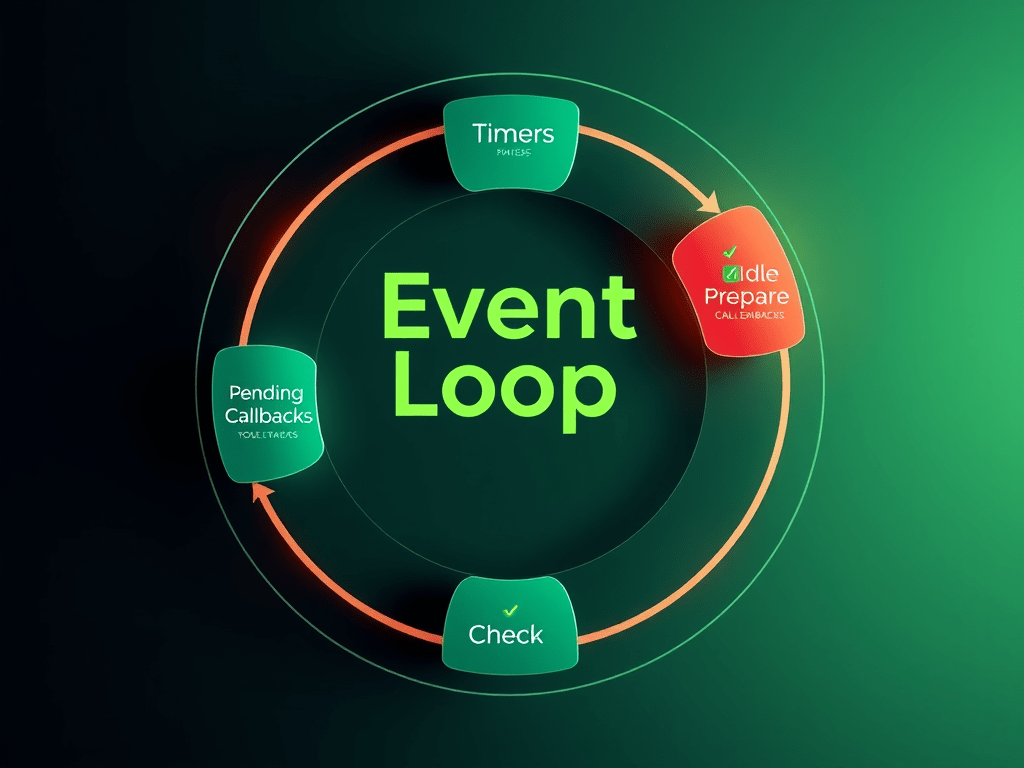 Continue reading →: Event Loop in Node.js – more detail
The Event Loop in Node.js is essential for managing asynchronous operations on a single thread. It consists of six phases that handle callbacks from I/O operations, timers, and non-blocking functions. Node.js achieves concurrency by offloading heavy tasks to the libuv thread pool while processing events efficiently through the Event Loop…
-
Eventual Consistency in Distributed Systems
Published by
on
 Continue reading →: Eventual Consistency in Distributed Systems
In modern distributed systems, achieving high availability and performance often comes with trade-offs in data consistency. Eventual consistency is a widely adopted consistency model that prioritizes system availability while ensuring that data changes eventually propagate across all nodes in a system. This blog explores what eventual consistency is, how to…
-
 Continue reading →: Understanding NoSQL Databases: Strengths, Weaknesses, and Popular Options
NoSQL databases are increasingly popular for handling unstructured and semi-structured data due to their flexibility, scalability, and performance. This blog examines various NoSQL databases, including MongoDB and Cassandra, outlining their strengths and weaknesses. While they excel in certain applications, they may fall short for transactional tasks compared to traditional SQL…
-
 Continue reading →: Popular SQL Databases: Strengths and Weaknesses
In today’s data-centric environment, selecting the right SQL database is crucial for application performance and scalability. This guide reviews popular options like MySQL, PostgreSQL, Oracle, and others, highlighting their strengths and weaknesses. Understanding these databases will empower you to make informed decisions based on project requirements, whether for small or…
-
 Continue reading →: Design Patterns vs. Architectural Patterns
Design patterns are reusable solutions for specific problems in object-oriented design, focusing on individual components. Architectural patterns address system-wide challenges regarding organization and scalability. While design patterns improve code maintainability, architectural patterns ensure overall system resilience. Both are vital for creating effective, flexible, and scalable software solutions.
Hello,
I’m Tran Minh

Hi, I’m Trần Minh, a Solution Architect passionate about crafting innovative and efficient solutions that make technology work seamlessly for you. Whether you’re here to explore the latest in tech or just to get inspired, I hope you find something that sparks joy and curiosity. Let’s embark on this exciting journey together!
Let’s connect
Join the fun!
Stay updated with our latest tutorials and ideas by joining our newsletter.




 VuiLenDi