
Web Modernization is the process of upgrading, improving, or restructuring web applications, websites, or related infrastructures to meet modern user demands and standards. The primary goal of web modernization is to enhance performance, user experience, scalability, and security while ensuring compatibility with new technologies and trends.
The Importance of Modernization
Modernization is not only moving from the old system to the cloud but also upgrading architecture, performance, and maintainability. Usually, that has consist:
- Rehosting (Lift and Shift): Move from the old system to the cloud but don’t change so much.
- Replatforming: Improving some parts (database, storage, etc.)
- Refactoring: Restructure the system to leverage the cloud features such as serverless, microservices.
Steps to Modernize Your Website

Assessment

Planning

Design

Implementation & Testing

Migration & Trainning

Operation & Optimization
- Assessment: Conduct comprehensive assessments (Legacy Application, Data, Infrastructure).
- Planning: Build a modernization strategy: Rehost, Replatform, Refactor.
- Migration: Start migrating in small pieces (Pilot Migration).
- Optimization: Optimize cost, performance, and security.
Phase 1 – Assessment
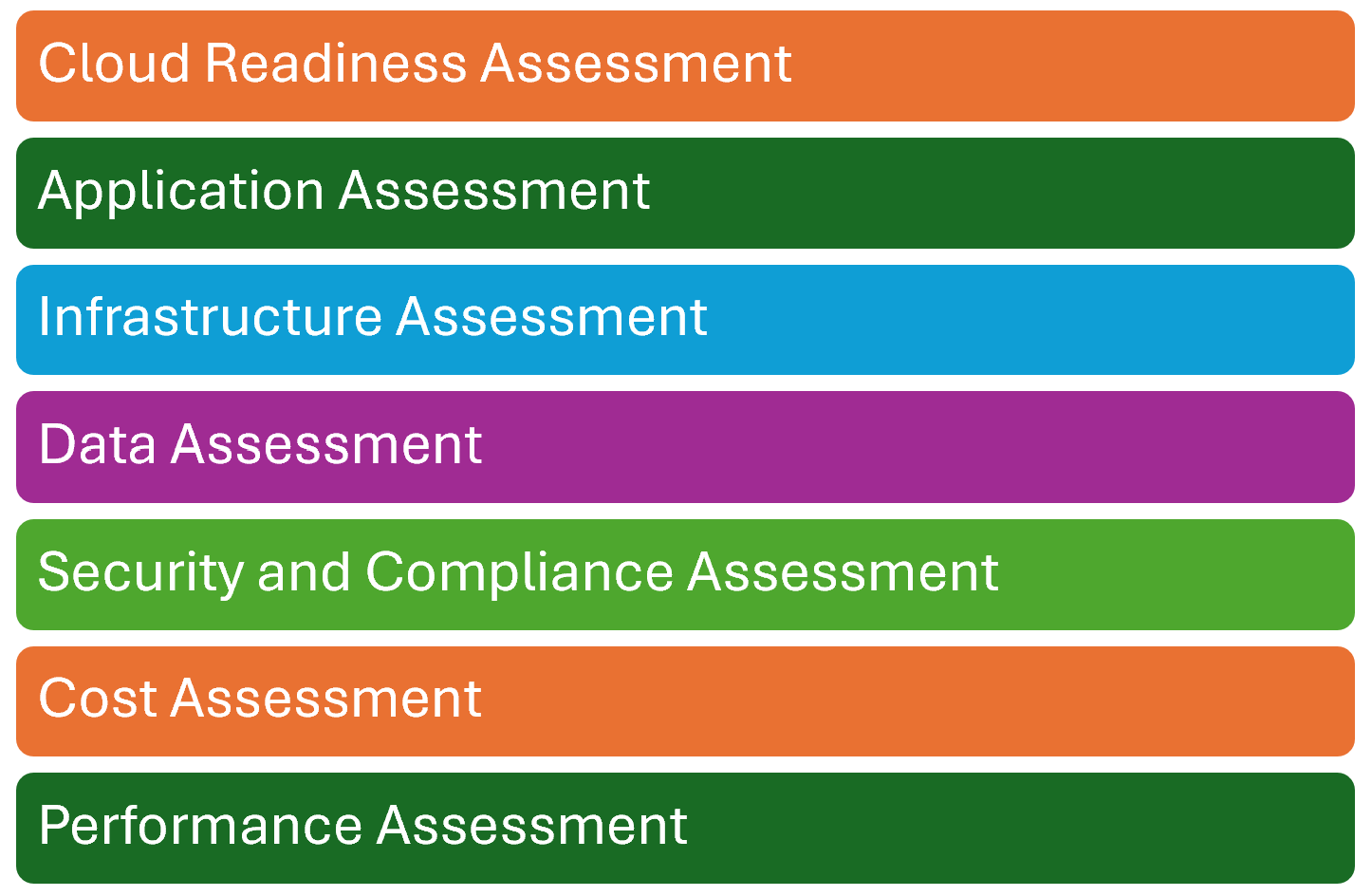
To effectively modernize, we need to conduct assessments to evaluate at various levels systematically: technical, operational, and strategic. There’re some consider assessments:
- Cloud Readiness Assessment
- Purpose: To evaluate the organization’s overall preparedness for migrating systems to the cloud.
- Scope: Analyzes technical capabilities, cultural readiness, and business alignment to identify gaps and plan a migration strategy.
- Read more: https://minhvuilendi.com/2025/02/04/cloud-readiness-assessment-more-details/
- Application Assessment
- Purpose: To understand the architecture, dependencies, and scalability of applications.
- Scope: Helps determine the best migration strategy—whether to rehost, replatform, or refactor applications for optimal cloud performance.
- Read more: https://minhvuilendi.com/2025/02/04/application-assessment-more-details/
- Infrastructure Assessment
- Purpose: To assess the current hardware, network, and storage systems.
- Scope: Ensures that infrastructure components can be efficiently replicated, optimized, or replaced on the cloud.
- Read more: https://minhvuilendi.com/2025/02/04/infrastructure-assessment-more-details/
- Data Assessment
- Purpose: To evaluate the structure, volume, and sensitivity of data.
- Scope: Identifies the best methods for migrating and managing data securely and efficiently in the cloud.
- Read more: https://minhvuilendi.com/2025/02/04/data-assessment-more-details/
- Security and Compliance Assessment
- Purpose: To ensure that the cloud environment adheres to security best practices and regulatory requirements.
- Scope: Reviews existing security policies, identifies vulnerabilities, and ensures compliance with standards like GDPR, HIPAA, or PCI-DSS.
- Read more: https://minhvuilendi.com/2025/02/04/security-and-compliance-assessment-more-details/
- Cost Assessment
- Purpose: To estimate the financial impact of modernization.
- Scope: Provides a detailed cost-benefit analysis, including migration costs and projected savings.
- Read more: https://minhvuilendi.com/2025/02/04/cost-assessment-more-details/
- Performance Assessment
- Purpose: To measure the current performance of systems and applications.
- Scope: Identifies bottlenecks and ensures that cloud-based systems meet performance expectations after migration.
- Read more: https://minhvuilendi.com/2025/02/04/performance-assessment-more-details/
Phase 2 – Planning
Now that we have completed the assessment phase, the next step in web modernization is to build a modernization strategy. The key decision here is whether to Rehost, Replatform, or Refactor, and this decision significantly impacts cost, complexity, and long-term benefits.
I. Key Objectives
✅ Define modernization goals aligned with business and technical requirements.
✅ Conduct detailed migration planning (Rehost, Replatform, or Refactor).
✅ Select cloud services, compute resources, and data strategies.
✅ Establish security, compliance, and cost optimization frameworks.
✅ Develop a risk mitigation plan and DevOps strategy for smooth execution.
II. Key Planning Steps
- Choose the Right Modernization Strategy:
- Rehost (Lift & Shift) → Quick migration with minimal changes.
- Replatform → Optimize workloads using cloud-native services.
- Refactor → Redesign applications for microservices or serverless.
- Define Target Architecture & Cloud Services:
- Select compute (VMs, containers, serverless) and storage (S3, Blob, Cloud Storage).
- Choose managed databases (RDS, Azure SQL, Cloud SQL) vs. NoSQL (DynamoDB, CosmosDB, Firestore).
- Implement networking (VPCs, VPNs, load balancers, CDN) for high availability.
- Plan Data Migration:
- Identify structured & unstructured data and select migration tools (AWS DMS, Azure DMS, GCP Transfer Service).
- Define a backup & rollback strategy to prevent data loss.
- Security & Compliance Strategy:
- Implement IAM, encryption, firewalls (WAF, Shield, Cloud Armor).
- Ensure compliance with GDPR, HIPAA, PCI-DSS using AWS Artifact, Azure Compliance, GCP Assured Workloads.
- DevOps, CI/CD & Automation Planning:
- Set up CI/CD pipelines (CodePipeline, Azure DevOps, Cloud Build).
- Use Infrastructure as Code (Terraform, CloudFormation, Deployment Manager).
- Cost Optimization & Risk Management:
- Estimate cloud costs using AWS Cost Explorer, Azure Cost Management, GCP Pricing Calculator.
- Develop a risk mitigation plan with rollback strategies & phased deployment.
Read more: Planning in Modernize Architecture
Phase 3 – Design
After completing the Assessment and Planning phases, the Design phase is where we define the architecture, select cloud-native components, and ensure that the system aligns with modernization goals. This phase focuses on creating a scalable, secure, high-performance, and cost-efficient architecture that supports long-term growth.
I. Key Objectives
✅ Define the target architecture (Monolithic → Microservices, Serverless, or Hybrid).
✅ Optimize compute, storage, database, and networking for scalability and efficiency.
✅ Implement security best practices to ensure compliance and data protection.
✅ Enable DevOps, CI/CD, and Infrastructure as Code (IaC) for automation.
✅ Design for monitoring, observability, and cost optimization.
II. Designing the Modernized Architecture
- Choose the Right Cloud Architecture:
- Microservices & Containers → Kubernetes (EKS, AKS, GKE).
- Serverless → AWS Lambda, Azure Functions, Google Cloud Functions.
- Hybrid/Multi-Cloud → AWS Outposts, Azure Arc, Google Anthos.
- Optimize Compute Resources:
- VMs (AWS EC2, Azure VMs, GCP Compute Engine) for traditional workloads.
- Containers (ECS, AKS, GKE) for scalable apps.
- Serverless for event-driven applications.
- Storage & Database Modernization:
- Object Storage (S3, Blob Storage, Cloud Storage) for static files.
- Relational Databases (RDS, Azure SQL, Cloud SQL) for structured data.
- NoSQL Databases (DynamoDB, CosmosDB, Firestore) for high-speed transactions.
- Security & Compliance Design:
- IAM, Role-Based Access Control (RBAC), Zero Trust Security.
- Encryption (KMS, Key Vault, Cloud KMS) and firewalls (WAF, Cloud Armor).
- DevOps & Infrastructure Automation:
- CI/CD pipelines with AWS CodePipeline, Azure DevOps, Google Cloud Build.
- Infrastructure as Code (Terraform, CloudFormation, Deployment Manager).
III. Key Considerations
✅ Scalability & Performance: Implement auto-scaling, caching (ElastiCache, Redis, Memorystore), and CDNs.
✅ Cost Optimization: Use reserved instances, spot instances, and savings plans.
✅ High Availability & Disaster Recovery: Deploy multi-region architectures and automated backups.
Read more: Designing the Modernized Architecture
Phase 4 – Implementation & Testing
I. Key Objectives
✅ Deploy cloud infrastructure & services.
✅ Migrate applications & data with minimal downtime.
✅ Implement CI/CD pipelines for automated deployment.
✅ Conduct performance, security, and resilience testing.
✅ Ensure a smooth go-live with monitoring & rollback plans.
II. Implementation Plan
- Infrastructure Deployment: Use IaC (Terraform, CloudFormation) to provision compute, storage, and networking.
- Application Deployment & Migration:
- Rehost (Lift & Shift) → Deploy VMs & migrate apps.
- Replatform → Use containers & managed databases.
- Refactor → Implement microservices & serverless computing.
- CI/CD Integration: Automate deployments with AWS CodePipeline, Azure DevOps, Google Cloud Build.
III. Testing Strategies
- Functional Testing: Validate app behavior using Selenium, JUnit, Postman.
- Performance Testing: Load & stress test with JMeter, Locust, k6.
- Security Testing: Identify vulnerabilities with SAST, DAST, and penetration testing.
- Chaos Engineering & Resilience Testing: Simulate failures using AWS Fault Injection Simulator, Azure Chaos Studio.
- User Acceptance Testing (UAT): Gather end-user feedback & ensure UI consistency.
IV. Go-Live & Post-Migration Support
- Deployment Strategy: Use Rolling, Blue-Green, or Canary Deployments.
- Monitoring & Observability: Implement AWS CloudWatch, Azure Monitor, Google Cloud Logging for real-time insights.
- Auto-Healing & Incident Response: Enable auto-scaling, logging, and alerting for system resilience.
Read more: Implementation & Testing in Web Modernization
Phase 5 – Migration & Training
I. Key Objectives
✅ Execute migration strategies (Rehost, Replatform, Refactor) with minimal disruption.
✅ Ensure data consistency, application availability, and rollback mechanisms.
✅ Implement security best practices during and after migration.
✅ Train teams on cloud services, DevOps workflows, and operational best practices.
✅ Validate system stability post-migration and ensure user adoption.
II. Migration Execution
- Pre-Migration Preparation:
- Ensure cloud infrastructure readiness and conduct staging environment tests.
- Choose Big Bang, Phased, or Parallel Migration approach.
- Create final backups and rollback plans.
- Application & Data Migration:
- Rehost: Move workloads to AWS EC2, Azure VMs, GCP Compute Engine.
- Replatform: Deploy to containers (EKS, AKS, GKE) or serverless (Lambda, Functions, Cloud Run).
- Refactor: Implement microservices, APIs, and event-driven architectures.
- Database Migration: Use AWS DMS, Azure DMS, GCP DMS.
- Storage Migration: Migrate to S3, Blob Storage, Google Cloud Storage.
- Post-Migration Validation:
- Verify functionality, security, and performance.
- Implement monitoring tools (CloudWatch, Azure Monitor, Google Operations Suite).
- Optimize cloud costs using reserved instances, spot instances, and auto-scaling.
III. Training & Knowledge Transfer
- Technical Training for IT Teams:
- Cloud platform hands-on training (AWS, Azure, GCP).
- DevOps & CI/CD training on Terraform, CloudFormation, Ansible.
- Security awareness for IAM, encryption, compliance policies.
- Business User Training & Adoption:
- Provide onboarding for cloud-based applications.
- Maintain documentation, SOPs, and knowledge bases.
IV. Go-Live & Continuous Improvement
- Final Go-Live Readiness Check:
- Perform final validation, DNS cutover, and monitoring setup.
- Post-Go-Live Monitoring & Optimization:
- Use real-time tracking and alerts to ensure system stability.
- Optimize compute resources and auto-scaling policies.
- Continuous Training & Development:
- Conduct ongoing cloud skill development and certification programs.
Read more: Migration & Training in Web Modernization
Phase 6 – Operation & Optimization
I. Key Objectives
✅ Ensure system reliability and high availability through continuous monitoring.
✅ Optimize cloud performance, resource utilization, and cost efficiency.
✅ Strengthen security measures to protect against cyber threats and compliance risks.
✅ Automate operational processes for efficiency and resilience.
✅ Continuously improve based on performance insights and user feedback.
II. Key Areas of Operation & Optimization
- Performance Monitoring & Incident Management:
- Use AWS CloudWatch, Azure Monitor, Google Operations Suite for real-time tracking.
- Automate issue resolution with Lambda, Logic Apps, Cloud Functions.
- Implement auto-healing mechanisms in Kubernetes and cloud-native workloads.
- Cost Optimization & Resource Efficiency:
- Right-size instances and auto-scale workloads to reduce costs.
- Implement storage tiering and database optimization to prevent overuse.
- Use FinOps strategies to track, analyze, and control cloud spending.
- Security & Compliance Enhancements:
- Monitor security threats with AWS Security Hub, Azure Defender, Google Security Command Center.
- Enforce IAM best practices, role-based access control (RBAC), and Zero Trust Security.
- Conduct automated compliance audits and penetration testing regularly.
- Automation & DevOps Optimization:
- Implement Infrastructure as Code (Terraform, CloudFormation, ARM, Deployment Manager).
- Improve CI/CD pipelines with AWS CodePipeline, Azure DevOps, Google Cloud Build.
- Automate deployment and rollback processes to minimize downtime.
- Continuous Improvement & Innovation:
- Conduct game days (AWS Fault Injection Simulator, Azure Chaos Studio, Gremlin) to test resilience.
- Monitor UX with Core Web Vitals, Lighthouse, New Relic for performance improvements.
- Future-proof with AI/ML, edge computing, and multi-cloud strategies.
Read more: Operation & Optimization in Web Modernization
Conclusion
Web modernization is not just a technical upgrade; it is a strategic transformation that enhances scalability, performance, security, and cost efficiency while enabling businesses to innovate and adapt to changing demands.
By following a structured modernization roadmap—from Assessment, Planning, Design, Implementation, Migration, and Training to Operation & Optimization—organizations can successfully transition from legacy systems to cloud-native architectures.
Key Takeaways
✅ Future-Proofed Architecture → Cloud-native design ensures flexibility, agility, and high availability.
✅ Improved Performance & Reliability → Optimized compute, database, and networking enhance scalability and efficiency.
✅ Stronger Security & Compliance → Implementing Zero Trust, IAM, encryption, and automated monitoring safeguards data.
✅ Cost Efficiency & Resource Optimization → Leveraging serverless, auto-scaling, and FinOps strategies maximizes cloud ROI.
✅ Empowered Teams & Continuous Innovation → Training, DevOps automation, and AI-driven optimizations drive long-term success.
Final Thoughts
Modernizing web applications is not a one-time project but an ongoing process of refinement, automation, and security hardening. By adopting cloud best practices, continuously monitoring performance, and optimizing resources, organizations can stay competitive, drive innovation, and deliver superior digital experiences.




 VuiLenDi
Leave a comment