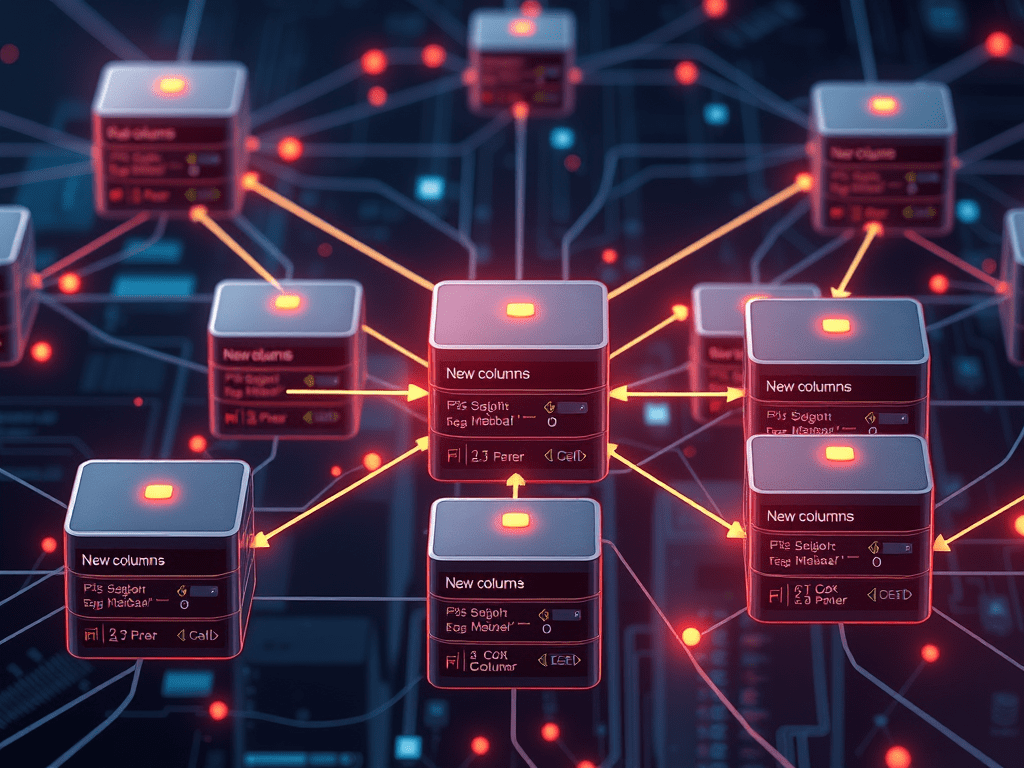
Schema evolution in distributed databases is a critical challenge, especially in systems with high availability and scalability requirements. Managing schema changes without disrupting ongoing operations requires careful planning and execution. Below are strategies and best practices to handle schema evolution effectively.
1. Understand Schema Evolution
Schema evolution refers to the process of modifying a database schema (e.g., adding, removing, or altering columns, tables, or relationships) while ensuring:
- Existing applications continue to function.
- Data consistency and integrity are maintained.
- Downtime is minimized.
2. Challenges in Distributed Databases
Distributed databases introduce additional complexities for schema evolution:
- Multiple Nodes: Changes must propagate across all nodes.
- Consistency: Ensuring data remains consistent during and after schema changes.
- Backward Compatibility: Supporting older versions of the schema for existing applications.
- Online Schema Changes: Avoiding downtime while applying changes.
3. Common Strategies for Schema Evolution
3.1. Backward and Forward Compatibility
- Ensure schema changes are backward-compatible: Old applications should function with the new schema.
- Ensure forward-compatibility: New applications should handle data written with the old schema.
How:
- Use default values for new fields.
- Avoid deleting fields immediately; instead, deprecate them over time.
3.2. Schema Migration Patterns
- Apply schema changes in a phased approach:
- Expand: Add new fields or tables while retaining old ones.
- Migrate: Gradually update existing data to conform to the new schema.
- Contract: Remove old fields or tables after all dependencies are updated.
Example:
- Add a new column (
new_column) to a table. - Update the application to write to both the old and new columns.
- Migrate existing data to the new column.
- Remove the old column once all dependencies are updated.
3.3. Use Versioning
- Maintain versioned schemas to differentiate between changes.
- Include a
schema_versionfield in the data to indicate which version the data conforms to.
How:
- Applications use the
schema_versionto determine how to parse and handle data. - Allows support for multiple schema versions during transitions.
3.4. Online Schema Changes
- Perform schema changes without downtime:
- Use tools that support online migrations (e.g.,
pt-online-schema-changefor MySQL). - Distribute changes incrementally across nodes.
- Use tools that support online migrations (e.g.,
Example:
- In a distributed system like Cassandra or MongoDB, add schema changes to nodes gradually and allow the system to converge.
3.5. Schema-less Designs
- Use schema-less or semi-structured databases (e.g., MongoDB, DynamoDB) that can handle unstructured or evolving data.
How:
- Add new fields without impacting existing records.
- Use application logic to handle missing or new fields dynamically.
3.6. Data Transformation Pipelines
- Use ETL (Extract, Transform, Load) processes to transform data into the new schema while migrating data.
How:
- Extract data from the old schema.
- Transform it into the new schema format.
- Load it back into the database.
3.7. Automation and CI/CD Integration
- Automate schema changes and migrations as part of your CI/CD pipelines.
- Use tools like:
- Flyway or Liquibase for versioned migrations.
- Schema Registry for Avro/JSON data schemas.
How:
- Track schema changes in version control.
- Apply changes incrementally across environments (development → staging → production).
4. Framework and Tool Support
Relational Databases
- MySQL/PostgreSQL:
- Use
ALTER TABLEfor schema changes. - Tools like
pt-online-schema-changefor non-blocking changes.
- Use
- Flyway or Liquibase:
- Manage versioned migrations.
NoSQL Databases
- MongoDB:
- Natively supports flexible schemas.
- Use migration scripts to update existing documents.
- Cassandra:
- Add new columns, but avoid altering existing column types or deleting columns immediately.
- DynamoDB:
- Flexible schema design allows adding new attributes without changes to existing records.
Message and Data Formats
- Avro/Protobuf:
- Use schema registries to manage versions.
- Supports backward and forward compatibility.
- JSON:
- Include versioning in JSON payloads to manage schema changes.
5. Best Practices for Schema Evolution
- Plan for Change:
- Anticipate schema changes during the initial design phase.
- Use Feature Toggles:
- Deploy new features behind toggles, allowing gradual adoption.
- Test Thoroughly:
- Validate schema changes in staging environments before production.
- Monitor and Rollback:
- Monitor the impact of schema changes and prepare rollback plans.
- Document Changes:
- Maintain clear documentation for schema versions and their associated changes.
6. Example: Schema Evolution in MongoDB
Scenario: Adding a new field email to a user document.
Step 1: Add the Field:
Modify the application to write the new email field.
db.users.updateMany({}, { $set: { email: null } });
Step 2: Update Applications:
Ensure new applications handle both old and new documents.
Step 3: Migrate Data:
Update existing documents with email addresses where applicable.
db.users.updateMany({ email: { $exists: false } }, { $set: { email: 'unknown@example.com' } });
Step 4: Remove Deprecated Fields:
After all dependencies are updated, remove old fields if needed.
db.users.updateMany({}, { $unset: { oldField: "" } });
Conclusion
Schema evolution in distributed databases requires careful planning, backward compatibility, and efficient tools to avoid disruption. By adopting practices like phased migrations, schema versioning, and leveraging database-specific features, you can ensure seamless evolution of your schema while maintaining system stability and performance.




 VuiLenDi
Leave a comment