1. Definitions
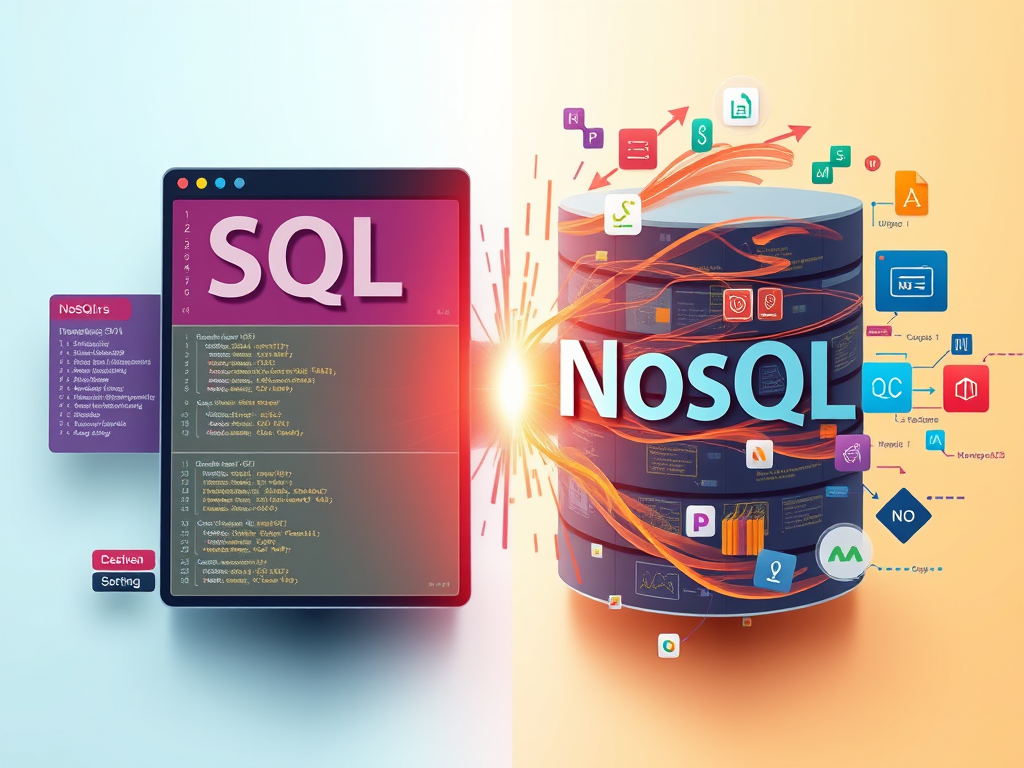
- SQL (Structured Query Language): SQL databases are relational databases like MySQL, PostgreSQL, Oracle, and SQL Server. They store structured data in tables with rows and columns and are ideal for complex queries and data consistency.
- NoSQL (Not Only SQL): NoSQL databases are non-relational and designed for unstructured or semi-structured data. Popular NoSQL databases include MongoDB, Cassandra, and Redis, using models like key-value, document, column-family, or graph for flexible, large-scale data storage.
2. Key Differences
| Criteria | SQL | NoSQL |
|---|---|---|
| Data Structure | Structured, relational, stored in tables | Flexible, semi-structured/unstructured |
| Data Model | Relational, with primary and foreign keys | Varies: Key-Value, Document, Column-family, Graph |
| Query Language | Standardized SQL | Non-standardized; varies by database (e.g., MongoDB uses JSON-like queries) |
| Scalability | Vertical scaling (add resources to server) | Horizontal scaling (add more servers) |
| ACID Compliance | Strict ACID compliance | Generally follows BASE (Eventual consistency) |
| Transaction Handling | Suited for complex transactions | Ideal for high-performance, less complex consistency requirements |
| Use Cases | Financial systems, ERP, CRM | Big data, IoT, social media, analytics |
3. When to Use SQL vs. NoSQL
Use SQL when:
- Data is structured and relational: Ideal for systems like ERP, financial applications, or CRMs that need strict data integrity.
- Consistency is crucial (ACID): In applications like banking or accounting, data consistency and safety are essential.
- Complex transactions and queries: SQL excels with complex joins and relational data handling.
Use NoSQL when:
- Data is unstructured or semi-structured: For social media posts, IoT logs, or multi-source data.
- Scalability and performance are key: NoSQL is built for large-scale, high-speed data handling, like social networks or analytics.
- Eventual consistency is acceptable: For applications like social media feeds or big data, immediate consistency is less critical.
- Fast development: NoSQL allows flexible schema changes, enabling rapid feature updates.
Summary
- SQL is ideal for structured data with high consistency needs.
- NoSQL is best for flexible, large-scale data applications needing high performance and scalability.
The choice between SQL and NoSQL depends on the application’s data structure, scalability needs, and consistency requirements.




 VuiLenDi
Leave a comment